
From JET to Supply Chain — Building a Career in a Japanese Company
Many JET Program participants wonder what comes next after returning home — how to transform their teaching experience, Japanese language skills, and cultural understanding into a long-term professional career.
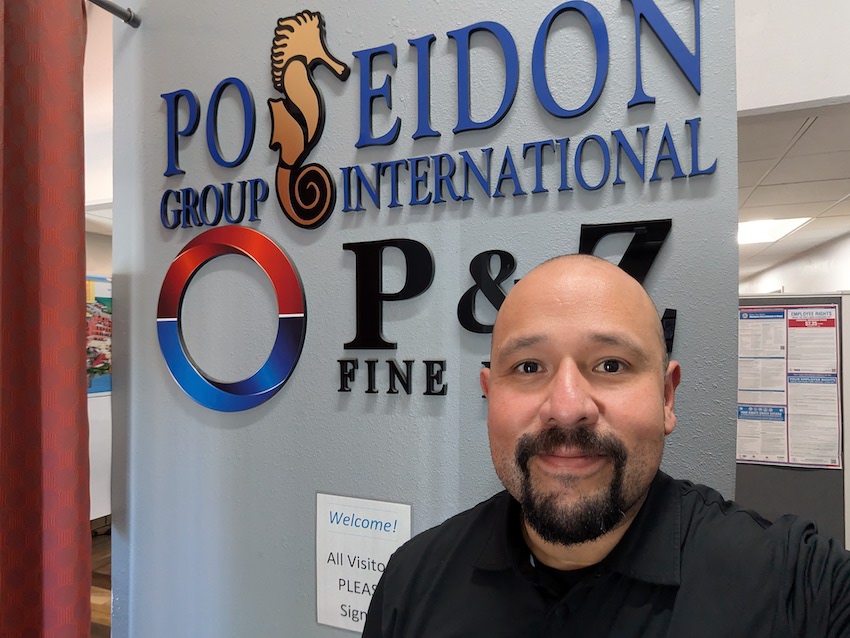
To explore one such path, we’re featuring Michael Trujilloさん (Poseidon Group International / Warehouse Supervisor) and his journey across cultures, industries, and career stages.
Founded in 1994 in Los Angeles, Poseidon Group Internationalbegan with a mission to deliver high-quality Japanese food across the United States. Starting with fresh tuna imports between Japan and the U.S., the company has grown into a global distributor of Japanese premium seafood and Wagyu beef, supported by HACCP-certified processing facilities in both Japan and Los Angeles. From ultra-low-temperature storage to strict quality management, Poseidon is known for its dedication to “Safety of Food, Joy of Eating” — a commitment reflected in every step of its logistics and operations.
Within this global supply chain, Michaelさん plays a key role as a Warehouse Supervisor, overseeing staff management, quality control, and daily shipping operations.
Originally from Los Angeles, he spent one year in Fukumitsu-machi (福光町), Toyama Prefecture(富山県) through the JET Program before returning to the U.S. in 2005. Instead of pursuing Japan-related roles, he went on to build a solid career in supply chain and logistics — a path that has recently brought him back into connection with a Japanese corporation once again.
JETから新しいキャリアへ。
日本での経験が “グローバルに通じる強み” へと自然に変わっていく、そのリアルな道のりをご紹介します。
Editorial Note:
Some testimonials have been lightly edited for clarity, grammar, and length without changing the original meaning.
Q&A Interview
Q1. What is your connection to Japan or the Japanese language and culture?
My connection to Japan began in college, when I worked part-time in my school’s English as a Second Language department. Many of the students I supported were from Japan, and getting to know them sparked my interest in Japanese language and culture.
After three years in that role, my department head encouraged me to apply to the JET Program. I was accepted and spent one year as a Junior High School English teacher in Toyama Prefecture. Moving from Los Angeles to a small farming town called Fukumitsu-machi was a big change, but also one of the best experiences of my life.
When I returned to Los Angeles in 2005, I didn’t pursue Japan-related roles or positions that required Japanese. Instead, I entered into the supply chain and logistics field, where I built more than 20 years of experience. Recently, my path led me back to working with Japanese companies and people.
Q2. What motivated you to work for a Japanese corporation?
During a recent job search, I received offers from both Poseidon and another company around the same time. The salary and benefits were similar, but I had always appreciated the friendly, close-knit atmosphere of Japanese culture during my time in Toyama.
Even though my new role isn’t Japan-focused and doesn’t require Japanese language skills, the overall work environment at Poseidon felt like the right fit. Small traditions like omiyage — bringing back a small gift from a trip, usually a snack — create a warm, welcoming atmosphere, and that played a big part in my decision.
Q3. Compared with other Japanese–English professionals, what unique strengths or competitive advantages do you have?
I bring over 20 years of experience in supply chain management and logistics, mostly in industrial supply. Those skills transferred surprisingly well into handling high-end seafood and Wagyu beef at Poseidon.
Even though my current job doesn’t center around Japan, my previous experience living there helps me connect across cultures. I also speak Spanish, which allows me to serve as a bridge between our Spanish-speaking staff and our Japanese-speaking staff whenever communication gaps come up.
Having lived in Japan, I can also explain small cultural differences that might cause misunderstandings — for example, why people in Japan don’t usually say “bless you” after someone sneezes.

Q4. What has been the biggest challenge in working for a Japanese company, and how did you overcome it?
One initial challenge was getting my Japanese back into shape. Even though the language isn’t required for my role, I wanted to communicate more smoothly with my Japanese-speaking team members.
Poseidon has been very supportive, offering Japanese lessons that have helped me rebuild my skills and feel more confident working across different teams.
Looking for your next step in a U.S.–Japan career? / 次のキャリア、一緒に探しませんか?
Michaelさん’s story shows that international experience doesn’t have to define your entire career — yet it can broaden your perspective, strengthen your adaptability, and shape how you collaborate with people from different backgrounds.
Even in a role that isn’t Japan-focused, his logistics background, Spanish proficiency, cross-cultural communication skills, and year in Japan all contribute to the value he brings to Poseidon Group. As global companies continue to seek diverse talent, his journey highlights how a single year abroad can resonate throughout a long and successful career.
iiicareer supports professionals who want to build meaningful careers in bilingual, multicultural, and global companies across the U.S.
Whether you’re a former JET, a bilingual talent, or someone drawn to international environments, we can help you:
- discover roles that match your strengths
- prepare for interviews and salary negotiations
- connect with trusted employers
- explore opportunities in logistics, food import/export, manufacturing, HR, admin, and more
👉 If you’re ready to explore your next move, contact iiicareer today.
次のキャリアステップは、すぐそばにあるかもしれません!